

A leading electric bus operator, Ember, has unveiled ambitious plans for substantial expansion across Tayside and Fife, with significant implications for residents and commuters in Perth and Kinross. The company, co-founded by Keith Bradbury and Pierce Glennie, is rapidly gaining recognition for its reliable and affordable electric transport services, hinting at exciting new routes and infrastructure developments in our local area.
Since its inaugural Dundee-to-Edinburgh route launched in October 2020 amidst the challenges of the pandemic, Ember has seen a remarkable surge in popularity. Its network now spans various towns and cities throughout Tayside, Fife, and Stirling, earning widespread commendation for its consistent scheduling and cost-effective fares. This success is now paving the way for a more comprehensive regional presence, directly benefiting Perth and Kinross. New Routes and Local Charging Infrastructure on the Horizon
Speaking exclusively about their vision, Ember’s leadership expressed keen interest in introducing new services that could weave through Perth, Angus, and north-east Fife. This expansion aligns with a broader strategy to enhance connectivity in areas traditionally underserved by public transport.
Specifically for Perth, there are plans to establish additional charging facilities at South Inch. This investment is directly linked to Ember’s recently launched E9 service, which connects Perth railway station to Edinburgh, passing through scenic Pitlochry. Such infrastructure is vital for supporting a robust electric bus network, ensuring efficient and uninterrupted journeys for passengers.
Beyond Perth, the company is also exploring potential coastal routes between Dundee and Aberdeen, responding to public demand from towns like Arbroath and Montrose. Furthermore, alternative paths between Edinburgh and Dundee are being considered, potentially extending services to communities in north-east Fife such as St Andrews and Cupar. Discussions are already underway regarding new charging sites in Fife, earmarked for development next year, underscoring Ember’s commitment to growing its footprint across the region. Ambition to Complete Scottish Network Within a Year
Ember’s journey since 2020 has seen its route count multiply tenfold, now offering services to diverse destinations including Glasgow, Inverness, Fort William, Braemar, and Aviemore. The new E9 route, inaugurated on November 5, further solidifies its commitment to linking key Scottish locations. The long-term vision is even more expansive, aiming to complete its Scottish network within the next 12 months, with aspirations to extend services into Dumfries, Skye, and even northern England thereafter.
At the heart of Ember’s operating philosophy are passenger-centric features designed to make public transport more appealing and less stressful. These include flexible ticketing options, allowing cancellations or transfers without additional charges, and an innovative online tracker for real-time bus location updates. The company prides itself on a transparent pricing structure, maintaining consistent fares to ensure passengers feel valued rather than ‘ripped off’.
The initial decision to launch from Dundee was significantly influenced by the supportive stance of Dundee City Council, particularly its fleet manager, Fraser Crichton. This positive engagement contrasted with experiences with other local authorities, highlighting the importance of collaborative local governance in fostering innovative transport solutions. Dundee’s strategic location, offering a viable single-charge return journey to Edinburgh for Ember’s early electric coaches, also played a crucial role in its selection as a launchpad. Targeting Car Users for a Greener Perth and Kinross
Ember views its primary competition not as other bus operators, but as private car users. Its core mission is to entice individuals out of their vehicles and onto public transport, promoting a more efficient, environmentally friendly, and economical mode of travel. This strategy is particularly pertinent for Perth and Kinross, with its mix of urban and rural settings, where improved public transport can offer a tangible alternative to car dependency.
The company deliberately targets communities that may lack extensive existing services, as demonstrated by its E11 Dundee to Aberdeen route, which benefits various locations across Perthshire and Aberdeenshire. The development of charging infrastructure is key to unlocking new routes, allowing Ember to strategically connect towns and cities based on demand and road network viability.
As Ember continues its expansion, the prospect of enhanced electric bus services promises a significant uplift for connectivity and environmental sustainability within Perth and Kinross. The future looks bright for greener, more accessible public transport options in our region.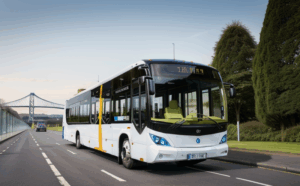
Since its inaugural Dundee-to-Edinburgh route launched in October 2020 amidst the challenges of the pandemic, Ember has seen a remarkable surge in popularity. Its network now spans various towns and cities throughout Tayside, Fife, and Stirling, earning widespread commendation for its consistent scheduling and cost-effective fares. This success is now paving the way for a more comprehensive regional presence, directly benefiting Perth and Kinross. New Routes and Local Charging Infrastructure on the Horizon
Speaking exclusively about their vision, Ember’s leadership expressed keen interest in introducing new services that could weave through Perth, Angus, and north-east Fife. This expansion aligns with a broader strategy to enhance connectivity in areas traditionally underserved by public transport.
Specifically for Perth, there are plans to establish additional charging facilities at South Inch. This investment is directly linked to Ember’s recently launched E9 service, which connects Perth railway station to Edinburgh, passing through scenic Pitlochry. Such infrastructure is vital for supporting a robust electric bus network, ensuring efficient and uninterrupted journeys for passengers.
Beyond Perth, the company is also exploring potential coastal routes between Dundee and Aberdeen, responding to public demand from towns like Arbroath and Montrose. Furthermore, alternative paths between Edinburgh and Dundee are being considered, potentially extending services to communities in north-east Fife such as St Andrews and Cupar. Discussions are already underway regarding new charging sites in Fife, earmarked for development next year, underscoring Ember’s commitment to growing its footprint across the region. Ambition to Complete Scottish Network Within a Year
Ember’s journey since 2020 has seen its route count multiply tenfold, now offering services to diverse destinations including Glasgow, Inverness, Fort William, Braemar, and Aviemore. The new E9 route, inaugurated on November 5, further solidifies its commitment to linking key Scottish locations. The long-term vision is even more expansive, aiming to complete its Scottish network within the next 12 months, with aspirations to extend services into Dumfries, Skye, and even northern England thereafter.
At the heart of Ember’s operating philosophy are passenger-centric features designed to make public transport more appealing and less stressful. These include flexible ticketing options, allowing cancellations or transfers without additional charges, and an innovative online tracker for real-time bus location updates. The company prides itself on a transparent pricing structure, maintaining consistent fares to ensure passengers feel valued rather than ‘ripped off’.
The initial decision to launch from Dundee was significantly influenced by the supportive stance of Dundee City Council, particularly its fleet manager, Fraser Crichton. This positive engagement contrasted with experiences with other local authorities, highlighting the importance of collaborative local governance in fostering innovative transport solutions. Dundee’s strategic location, offering a viable single-charge return journey to Edinburgh for Ember’s early electric coaches, also played a crucial role in its selection as a launchpad. Targeting Car Users for a Greener Perth and Kinross
Ember views its primary competition not as other bus operators, but as private car users. Its core mission is to entice individuals out of their vehicles and onto public transport, promoting a more efficient, environmentally friendly, and economical mode of travel. This strategy is particularly pertinent for Perth and Kinross, with its mix of urban and rural settings, where improved public transport can offer a tangible alternative to car dependency.
The company deliberately targets communities that may lack extensive existing services, as demonstrated by its E11 Dundee to Aberdeen route, which benefits various locations across Perthshire and Aberdeenshire. The development of charging infrastructure is key to unlocking new routes, allowing Ember to strategically connect towns and cities based on demand and road network viability.
As Ember continues its expansion, the prospect of enhanced electric bus services promises a significant uplift for connectivity and environmental sustainability within Perth and Kinross. The future looks bright for greener, more accessible public transport options in our region.