

A significant proposal has been formally presented to Perth and Kinross Council, outlining intentions for the complete removal of the venerable Blackford Hotel. This C-listed establishment, a prominent feature on Moray Street, has stood dormant for over a decade, its once grand façade now showing considerable signs of disrepair and neglect.
Constructed in 1896, the hotel has a long history within the Perthshire landscape. However, its prolonged vacancy has led to a noticeable decline in its condition, culminating in the current state of decay. Despite efforts to find a new owner, with the property actively marketed since its closure, no viable offers have come forward to breathe new life into the historic structure.
The current application marks a pivotal moment, following a previous attempt in 2018 by Highland Spring to repurpose the hotel into an office facility. That particular proposal encountered opposition and was ultimately declined by the authorities, primarily due to the building’s protected C-listed status, which acknowledges its architectural and historical importance.
Now, Highland Spring, a prominent local employer with bottling facilities at The Maltings on Moray Street and The Ochils on Stirling Street, employing 410 staff, has tabled a new set of plans focused on outright demolition. This move reflects the challenges associated with preserving a structure that has fallen into such extensive disuse and disrepair. The Hotel’s Deteriorating State and Public Concerns
Documents accompanying the planning submission highlight the hotel’s increasingly fragile condition, describing it as being in a ‘dilapidated state’ with protective scaffolding and anti-debris netting currently draped across its exterior. To illustrate the extent of the deterioration, the application includes a series of photographic evidence, capturing the internal conditions of the building as far back as 2001 and 2002. These images vividly portray the advanced decay, with elements like peeling wallpaper, damaged fixtures, and structural vulnerabilities apparent throughout the abandoned rooms and corridors.
The supporting statement within the application articulates the core rationale behind the demolition request. It acknowledges the acknowledged ‘heritage value’ of the Blackford Hotel but asserts that a thorough evaluation has determined that its present condition, coupled with the practical limitations it imposes on the surrounding Moray Street area, presents ‘significant challenges’. This includes the inherent risks it poses to public safety due to its structural instability.
Beyond the physical decline, the application also draws attention to a pattern of anti-social behaviour, vandalism, and various forms of damage that the vacant building has endured over its period of abandonment. Such issues often plague derelict properties, becoming a drain on local resources and a potential hazard to the community.
In light of these developments, the local authority, Perth and Kinross Council, has initiated a public consultation process. This crucial phase allows residents of Blackford and broader Perth and Kinross to review the submitted plans and provide their feedback. Highland Spring has indicated that discussions are already underway with an architect, expressing a desire to engage both the local community and key stakeholders in shaping future ideas for the site once the current planning decision is made. The public consultation on these demolition plans is set to conclude on Thursday, December 4, after which the council will proceed with its assessment and decision-making process.
The future of this long-standing Blackford landmark is at a critical juncture, with the proposed demolition opening up questions about the balance between historical preservation and practical community needs. The outcome of the council’s decision will undoubtedly have a lasting impact on the visual and functional landscape of Moray Street and the wider Blackford area, a decision eagerly awaited by those with a vested interest in Perthshire’s architectural heritage and community development.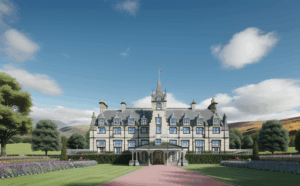
Constructed in 1896, the hotel has a long history within the Perthshire landscape. However, its prolonged vacancy has led to a noticeable decline in its condition, culminating in the current state of decay. Despite efforts to find a new owner, with the property actively marketed since its closure, no viable offers have come forward to breathe new life into the historic structure.
The current application marks a pivotal moment, following a previous attempt in 2018 by Highland Spring to repurpose the hotel into an office facility. That particular proposal encountered opposition and was ultimately declined by the authorities, primarily due to the building’s protected C-listed status, which acknowledges its architectural and historical importance.
Now, Highland Spring, a prominent local employer with bottling facilities at The Maltings on Moray Street and The Ochils on Stirling Street, employing 410 staff, has tabled a new set of plans focused on outright demolition. This move reflects the challenges associated with preserving a structure that has fallen into such extensive disuse and disrepair. The Hotel’s Deteriorating State and Public Concerns
Documents accompanying the planning submission highlight the hotel’s increasingly fragile condition, describing it as being in a ‘dilapidated state’ with protective scaffolding and anti-debris netting currently draped across its exterior. To illustrate the extent of the deterioration, the application includes a series of photographic evidence, capturing the internal conditions of the building as far back as 2001 and 2002. These images vividly portray the advanced decay, with elements like peeling wallpaper, damaged fixtures, and structural vulnerabilities apparent throughout the abandoned rooms and corridors.
The supporting statement within the application articulates the core rationale behind the demolition request. It acknowledges the acknowledged ‘heritage value’ of the Blackford Hotel but asserts that a thorough evaluation has determined that its present condition, coupled with the practical limitations it imposes on the surrounding Moray Street area, presents ‘significant challenges’. This includes the inherent risks it poses to public safety due to its structural instability.
Beyond the physical decline, the application also draws attention to a pattern of anti-social behaviour, vandalism, and various forms of damage that the vacant building has endured over its period of abandonment. Such issues often plague derelict properties, becoming a drain on local resources and a potential hazard to the community.
In light of these developments, the local authority, Perth and Kinross Council, has initiated a public consultation process. This crucial phase allows residents of Blackford and broader Perth and Kinross to review the submitted plans and provide their feedback. Highland Spring has indicated that discussions are already underway with an architect, expressing a desire to engage both the local community and key stakeholders in shaping future ideas for the site once the current planning decision is made. The public consultation on these demolition plans is set to conclude on Thursday, December 4, after which the council will proceed with its assessment and decision-making process.
The future of this long-standing Blackford landmark is at a critical juncture, with the proposed demolition opening up questions about the balance between historical preservation and practical community needs. The outcome of the council’s decision will undoubtedly have a lasting impact on the visual and functional landscape of Moray Street and the wider Blackford area, a decision eagerly awaited by those with a vested interest in Perthshire’s architectural heritage and community development.