

A long-anticipated report detailing Perth’s strategy for managing surface water flooding has been unexpectedly withdrawn from a recent council committee meeting, sparking renewed concerns among local residents. The decision to pull the Perth Surface Water Management Plan at the eleventh hour came after it was revealed that significant public feedback, gathered through online consultations and a dedicated public Q&A session, had not yet been fully integrated into the document.
This latest development means that discussions surrounding the critical four-year study, which was scheduled for review by members of the Climate Change and Sustainability Committee earlier this week, will now be postponed indefinitely. The delay adds another layer of frustration for communities across the Fair City, many of whom have endured repeated episodes of devastating surface water inundation. Years of Work, Lingering Questions
The Perth Surface Water Management Plan represents a substantial undertaking, initiated to identify and propose protective measures against the increasing threat of flooding from heavy rainfall and overflowing drainage systems. However, even prior to this current postponement, the report had already drawn criticism from local campaigners, who described its initial findings as a ‘damp squib’. This disappointment stemmed from the plan’s apparent failure to introduce any novel or effective flood protection schemes for Perth, despite extensive investigations.
Amey Consulting Ltd, appointed in December 2021, was tasked with drafting the comprehensive report. Their analysis confirmed that surface water constitutes a considerable portion of Perth’s overall flood risk, accounting for approximately 22% of all flood-related challenges. A key issue identified was the inadequate capacity within the city’s primary trunk sewers, which struggle to cope during periods of intense precipitation. The Scale of the Challenge for Perth Communities
The consultants’ findings paint a stark picture of the current and future vulnerability of Perth’s infrastructure and residential areas. Presently, an estimated 405 properties face a significant risk of flooding during a one-in-30-year flood event. Looking ahead, projections indicate a substantial increase in this number, with up to 1,041 properties potentially at risk in the future, a grim forecast attributed to the accelerating impacts of climate change.
Alarmingly, the vast majority — a staggering 91% — of these at-risk properties are concentrated within 60 identified ‘flooding hotspots’ that are already well-known across Perth. These areas, often low-lying or situated near overburdened drainage networks, represent continuous points of vulnerability for many households and businesses. The repeated incidents of water pooling on roads and in residential areas, as recently seen on Glasgow Road and around commercial hubs, underscore the urgent need for robust, actionable solutions. Public Voice: A Non-Negotiable Component
The Scottish Government mandates that local authorities conduct thorough cost-benefit analyses before embarking on any new flood protection schemes. This requirement emphasizes not only financial prudence but also the need for public engagement to ensure that proposed solutions genuinely address community needs and concerns. The current delay highlights the critical role of public input in shaping these vital protective strategies.
Councillor Richard Watters, convener of the Climate Change and Sustainability Committee, underscored the importance of integrating public perspectives fully. He stated: “Although the submitted report includes feedback received during the consultation period, the online feedback meeting and Q&A document reflecting the issues raised are still outstanding. For this reason, I have asked officers to withdraw the report. The contributions of residents who are most impacted by surface water flooding (are) a vital part of the process, and it is important that the committee is able to consider their feedback in its fullest context. A refreshed version of the report will be brought back to a future committee meeting once all feedback stages have been completed.”
This commitment to ensuring all voices are heard, while causing immediate frustration, is essential for a plan that ultimately aims to safeguard Perth’s future. The Perth and Kinross Council has affirmed that details regarding the rescheduled online feedback meeting and the publication of the Q&A information will be made public as soon as these arrangements are finalized. Until then, residents in vulnerable areas remain in a state of anxious anticipation, hoping that the next iteration of the plan will not only incorporate their views but also present viable, long-term solutions to a persistent threat.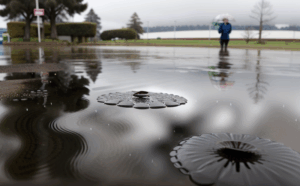
This latest development means that discussions surrounding the critical four-year study, which was scheduled for review by members of the Climate Change and Sustainability Committee earlier this week, will now be postponed indefinitely. The delay adds another layer of frustration for communities across the Fair City, many of whom have endured repeated episodes of devastating surface water inundation. Years of Work, Lingering Questions
The Perth Surface Water Management Plan represents a substantial undertaking, initiated to identify and propose protective measures against the increasing threat of flooding from heavy rainfall and overflowing drainage systems. However, even prior to this current postponement, the report had already drawn criticism from local campaigners, who described its initial findings as a ‘damp squib’. This disappointment stemmed from the plan’s apparent failure to introduce any novel or effective flood protection schemes for Perth, despite extensive investigations.
Amey Consulting Ltd, appointed in December 2021, was tasked with drafting the comprehensive report. Their analysis confirmed that surface water constitutes a considerable portion of Perth’s overall flood risk, accounting for approximately 22% of all flood-related challenges. A key issue identified was the inadequate capacity within the city’s primary trunk sewers, which struggle to cope during periods of intense precipitation. The Scale of the Challenge for Perth Communities
The consultants’ findings paint a stark picture of the current and future vulnerability of Perth’s infrastructure and residential areas. Presently, an estimated 405 properties face a significant risk of flooding during a one-in-30-year flood event. Looking ahead, projections indicate a substantial increase in this number, with up to 1,041 properties potentially at risk in the future, a grim forecast attributed to the accelerating impacts of climate change.
Alarmingly, the vast majority — a staggering 91% — of these at-risk properties are concentrated within 60 identified ‘flooding hotspots’ that are already well-known across Perth. These areas, often low-lying or situated near overburdened drainage networks, represent continuous points of vulnerability for many households and businesses. The repeated incidents of water pooling on roads and in residential areas, as recently seen on Glasgow Road and around commercial hubs, underscore the urgent need for robust, actionable solutions. Public Voice: A Non-Negotiable Component
The Scottish Government mandates that local authorities conduct thorough cost-benefit analyses before embarking on any new flood protection schemes. This requirement emphasizes not only financial prudence but also the need for public engagement to ensure that proposed solutions genuinely address community needs and concerns. The current delay highlights the critical role of public input in shaping these vital protective strategies.
Councillor Richard Watters, convener of the Climate Change and Sustainability Committee, underscored the importance of integrating public perspectives fully. He stated: “Although the submitted report includes feedback received during the consultation period, the online feedback meeting and Q&A document reflecting the issues raised are still outstanding. For this reason, I have asked officers to withdraw the report. The contributions of residents who are most impacted by surface water flooding (are) a vital part of the process, and it is important that the committee is able to consider their feedback in its fullest context. A refreshed version of the report will be brought back to a future committee meeting once all feedback stages have been completed.”
This commitment to ensuring all voices are heard, while causing immediate frustration, is essential for a plan that ultimately aims to safeguard Perth’s future. The Perth and Kinross Council has affirmed that details regarding the rescheduled online feedback meeting and the publication of the Q&A information will be made public as soon as these arrangements are finalized. Until then, residents in vulnerable areas remain in a state of anxious anticipation, hoping that the next iteration of the plan will not only incorporate their views but also present viable, long-term solutions to a persistent threat.