

A significant travel alert gripped Perthshire residents and commuters on Wednesday morning when a section of the M90 motorway, a vital artery for travel across the region, was unexpectedly closed. The cause was identified as a gas cylinder that had come to rest in the central reservation near Bridge of Earn, prompting swift action from emergency services due to concerns over a potential leak.
The incident unfolded on what began as a routine Wednesday, transforming the busy motorway into a scene of careful coordination and immediate response. Authorities quickly moved to shut down both northbound and southbound carriageways between Junctions 8 and 9. This particular stretch of the M90 is a familiar landmark for many traversing the route south of Perth, making the closure impactful for a broad spectrum of road users.
Initial reports indicated the presence of a gas cylinder, with emergency personnel working to assess the situation. The Scottish Fire and Rescue Service promptly dispatched an appliance to the location, confirming the nature of the hazard. “We have one appliance in attendance,” a spokesperson for the Scottish Fire and Rescue Service stated. “It is believed to be a gas cylinder loose on the carriageway, but we don’t have much more information. Police have closed both carriageways. It looks as though a gas cylinder has fallen off a lorry and has ended up in the central reservation.” This detailed account helped to clarify the circumstances surrounding the motorway’s unexpected closure.
The potential danger posed by a leaking gas cylinder on a high-speed road necessitated an immediate and comprehensive safety perimeter. The Police played a crucial role in managing the site, ensuring no vehicles or individuals were at risk while the situation was brought under control. The rapid establishment of these safety measures was paramount, highlighting the critical importance of coordinated emergency responses in such scenarios.
Traffic management teams, including those from Amey, were quick to implement diversions. A post on X by Amey, the trunk road operating company, confirmed: “M90 remains closed in both directions between junctions 8 and 9 due a leaking gas canister. Standard diversion being implemented.” For local commuters heading into or out of Perth, and for those travelling further afield, these diversions inevitably led to delays and longer journey times. Roads through nearby towns and villages experienced increased traffic volume, as drivers sought alternative routes to bypass the affected motorway section. Community Impact and Resolution
The disruption caused by incidents on major transport links like the M90 always has a ripple effect on the local community. Businesses relying on timely deliveries faced logistical challenges, while residents in surrounding areas adjusted to altered travel plans. The unexpected nature of the hazard underscored the fragility of daily routines when confronted with unforeseen safety concerns on primary road networks.
Throughout the morning, updates were eagerly awaited by a public keen to see the motorway safely reopened. Emergency crews worked diligently to secure the cylinder and clear the carriageway, ensuring that all risks were thoroughly mitigated before allowing traffic to resume. Their expertise and swift actions were instrumental in managing a potentially dangerous situation without further incident.
Relief spread across Perthshire when Traffic Scotland issued a decisive update. A later post on X by the national transport agency announced: “M90 Junction 9, both directions now fully open following the earlier hazard. Traffic in the area should begin to revert back to normal levels for the time of day shortly.” This confirmation marked the successful resolution of the incident, allowing the flow of vehicles to gradually return to its usual rhythm.
The rapid containment and resolution of this gas cylinder incident serve as a testament to the efficiency and preparedness of Perthshire’s emergency services and road management teams. Such events, while disruptive, highlight the continuous efforts to maintain safety and minimize public inconvenience on the region’s vital transport infrastructure. The experience reinforces the collective understanding of how quickly unforeseen hazards can emerge and how essential a coordinated and professional response is to safeguarding local communities and keeping Scotland’s roads moving.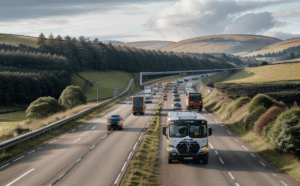
The incident unfolded on what began as a routine Wednesday, transforming the busy motorway into a scene of careful coordination and immediate response. Authorities quickly moved to shut down both northbound and southbound carriageways between Junctions 8 and 9. This particular stretch of the M90 is a familiar landmark for many traversing the route south of Perth, making the closure impactful for a broad spectrum of road users.
Initial reports indicated the presence of a gas cylinder, with emergency personnel working to assess the situation. The Scottish Fire and Rescue Service promptly dispatched an appliance to the location, confirming the nature of the hazard. “We have one appliance in attendance,” a spokesperson for the Scottish Fire and Rescue Service stated. “It is believed to be a gas cylinder loose on the carriageway, but we don’t have much more information. Police have closed both carriageways. It looks as though a gas cylinder has fallen off a lorry and has ended up in the central reservation.” This detailed account helped to clarify the circumstances surrounding the motorway’s unexpected closure.
The potential danger posed by a leaking gas cylinder on a high-speed road necessitated an immediate and comprehensive safety perimeter. The Police played a crucial role in managing the site, ensuring no vehicles or individuals were at risk while the situation was brought under control. The rapid establishment of these safety measures was paramount, highlighting the critical importance of coordinated emergency responses in such scenarios.
Traffic management teams, including those from Amey, were quick to implement diversions. A post on X by Amey, the trunk road operating company, confirmed: “M90 remains closed in both directions between junctions 8 and 9 due a leaking gas canister. Standard diversion being implemented.” For local commuters heading into or out of Perth, and for those travelling further afield, these diversions inevitably led to delays and longer journey times. Roads through nearby towns and villages experienced increased traffic volume, as drivers sought alternative routes to bypass the affected motorway section. Community Impact and Resolution
The disruption caused by incidents on major transport links like the M90 always has a ripple effect on the local community. Businesses relying on timely deliveries faced logistical challenges, while residents in surrounding areas adjusted to altered travel plans. The unexpected nature of the hazard underscored the fragility of daily routines when confronted with unforeseen safety concerns on primary road networks.
Throughout the morning, updates were eagerly awaited by a public keen to see the motorway safely reopened. Emergency crews worked diligently to secure the cylinder and clear the carriageway, ensuring that all risks were thoroughly mitigated before allowing traffic to resume. Their expertise and swift actions were instrumental in managing a potentially dangerous situation without further incident.
Relief spread across Perthshire when Traffic Scotland issued a decisive update. A later post on X by the national transport agency announced: “M90 Junction 9, both directions now fully open following the earlier hazard. Traffic in the area should begin to revert back to normal levels for the time of day shortly.” This confirmation marked the successful resolution of the incident, allowing the flow of vehicles to gradually return to its usual rhythm.
The rapid containment and resolution of this gas cylinder incident serve as a testament to the efficiency and preparedness of Perthshire’s emergency services and road management teams. Such events, while disruptive, highlight the continuous efforts to maintain safety and minimize public inconvenience on the region’s vital transport infrastructure. The experience reinforces the collective understanding of how quickly unforeseen hazards can emerge and how essential a coordinated and professional response is to safeguarding local communities and keeping Scotland’s roads moving.